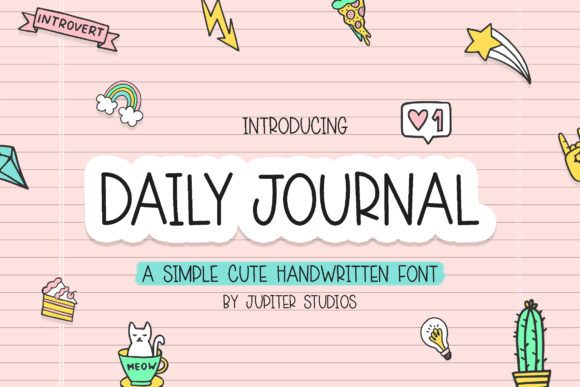
Daily Journal: A Handwritten Font with Chalkboard Charm
Finding a typeface that feels genuinely personal, without crossing into illegibility or cartoonishness, is a common challenge for designers. You want something that conveys warmth and authenticity, but still functions clearly in your layout. This is the sweet spot where Daily Journal excels. It’s a handwritten font designed to mimic the look of authentic, slightly textured lettering—the kind you’d find on a well-loved classroom chalkboard or in a personal diary. Its charm lies in its simplicity and subtle imperfections, making it a versatile design asset for a wide range of projects.
The Authentic Personality Behind the Letterforms
Unlike many script fonts that prioritize ornate flourishes, Daily Journal focuses on readability and character. Each letter has a slightly uneven baseline and varying stroke weights, which replicates the natural pressure of a hand holding chalk or a felt-tip pen. This isn’t a font that tries to be perfect; it embraces the handmade quality that gives it a relatable, human touch. The overall aesthetic is clean and approachable, making it an excellent display font for headlines, quotes, and short blocks of text where personality is key.
Its visual style avoids the overly whimsical or juvenile tones often associated with handwritten typefaces. Instead, it strikes a balance that feels mature and versatile. This makes Daily Journal suitable not just for children’s materials, but for projects targeting adults—from brand identity work for boutique businesses to editorial design for lifestyle magazines. The font’s inherent warmth can soften corporate communication, making a brand feel more accessible and human.
Where Daily Journal Truly Shines: Practical Applications
Understanding where a font works best is crucial for effective design. Daily Journal is particularly powerful in contexts where you want to evoke a sense of craftsmanship, nostalgia, or personal connection. Consider these practical applications:
- Chalkboard Quotes and Teaching Materials: This is its most natural habitat. The font’s texture and style are perfect for educational posters, classroom decorations, inspirational quotes, and digital learning resources. It adds a tangible, realistic feel that standard fonts lack.
- Brand Identity for Small Businesses: For entrepreneurs, especially in the café, bakery, boutique, or artisanal product space, this typeface can become a cornerstone of logo design and packaging. It communicates care, attention to detail, and a personal touch that resonates with customers seeking authentic brands.
- Marketing and Social Media Graphics: In the crowded space of social media graphics, a creative font like Daily Journal helps stop the scroll. Use it for Instagram story text, quote cards, promotional banners, and email headers. Its friendly vibe can increase engagement and make your content feel more like a conversation than an advertisement.
- Publishing and Editorial Projects: While not suited for long body text, it’s a fantastic choice for chapter titles, pull quotes, or section headers in books, magazines, and blogs. It adds a layer of personality to editorial design without overwhelming the reader.
- Personal Projects and Crafting: For hobbyists and crafters, Daily Journal is a valuable tool. Use it for scrapbooking, DIY wedding invitations, personal stationery, or custom planners. It brings a cohesive, handmade aesthetic to personal creations.
Strategic Use: Influence on Design and Perception
Choosing a typeface is a strategic decision that influences how your audience perceives your message. Daily Journal can significantly impact several aspects of your design’s effectiveness:
Visual Hierarchy and Readability: As a display font, its primary role is to attract attention and set a tone. Use it for headlines or key phrases to create a clear visual hierarchy. However, always pair it with a highly readable serif font or sans serif font for body copy. A pairing like Daily Journal with a clean, neutral sans-serif (like Open Sans or Lato) creates a pleasing contrast that guides the reader’s eye smoothly through the content.
Brand Perception and Recognition: Consistency in typography builds brand recognition. If you use Daily Journal as part of your brand identity—perhaps for your logo or primary headings—it will become synonymous with your brand’s voice. It tells your audience you value authenticity and personal connection. This can be especially powerful for brands in the wellness, education, lifestyle, or artisanal food sectors.
Audience Engagement: Fonts carry emotional weight. The informal, friendly nature of this handwritten font can lower barriers and make your audience feel more connected to your content. It’s less intimidating than a stark, modern geometric typeface. This can be leveraged in marketing materials, blog post titles, or website call-to-action buttons to encourage interaction.
Making the Right Choice: Practical Guidance for Designers
Before integrating any new font into your toolkit, a thoughtful evaluation is necessary. Here’s how to approach working with Daily Journal:
- Evaluate Project Fit: Ask yourself if the project’s tone aligns with a handmade, chalk-inspired aesthetic. It’s perfect for a children’s educational app, a local coffee shop’s menu, or a personal blog. It might be less appropriate for a law firm’s annual report or a fintech startup’s corporate website.
- Test Font Pairings: Never use a display font in isolation. Create mockups pairing Daily Journal with potential body fonts. Test for contrast in weight, style, and x-height. The goal is harmony, not competition. A simple serif like Merriweather or a geometric sans-serif like Montserrat often provides a solid foundation.
- Review Included Styles and Glyphs: Check what the font package includes. Does it have a full character set? Are there multiple weights (like Regular and Bold)? Are there stylistic alternates or ligatures that can add variety? Understanding these features allows you to use the premium font to its full potential.
- Conduct Readability Tests: Test the font at various sizes and on different backgrounds. While it’s designed for clarity, ensure the unique letterforms remain legible at the sizes you intend to use, especially in digital contexts where screen rendering can vary.
- Understand Commercial Licensing: If you’re using Daily Journal for commercial projects—client work, products for sale, or monetized content—you must ensure you have the appropriate license. Most commercial font licenses cover this, but always verify the terms to avoid legal issues.
In the realm of modern typography, where digital precision often dominates, a font like Daily Journal offers a refreshing return to the human hand. It’s more than just a collection of letters; it’s a tool for adding narrative, emotion, and authenticity to your visual communication. By understanding its strengths and applying it thoughtfully, you can leverage this creative font to make your designs more engaging, memorable, and personally resonant. Whether you’re crafting a brand’s story, designing educational content, or simply adding a personal touch to a project, it provides a distinct voice that stands out from the crowd.