Why Santiago is the Signature Font Your Brand Needs
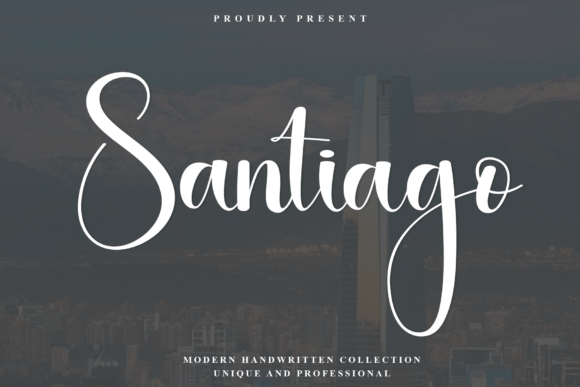
There’s a moment in every creative project where you realize the typeface you’ve chosen isn’t just holding words—it’s telling a story. I’ve seen it happen countless times: a logo goes from looking “nice” to feeling genuinely authentic. That shift often comes down to one element. For many of my clients, that element has been Santiago, a modern handwritten script font that strikes a rare balance between elegance and approachability.
What makes Santiago stand out in a crowded field of script fonts? Its curves feel generous and intentional, never rushed or overly casual. The strokes elongate with a natural grace, creating a rhythm that feels both sophisticated and deeply personal. This isn’t a font that tries to mimic quick, messy handwriting. Instead, it captures the essence of a skilled calligrapher’s steady hand—the kind of writing you’d see on a bespoke invitation or a luxury brand’s monogram. It’s a premium font that delivers real-world versatility without sacrificing its unique character.
The Anatomy of an Elegant Script
When I evaluate a script font like Santiago, I look beyond the initial impression. I test how it performs in real applications. Its smooth, flowing letterforms connect beautifully, which is crucial for creating a cohesive look in logo design or a wordmark. The generous spacing within and between letters prevents the text from feeling cramped, even at smaller sizes. This attention to detail is what separates a professional display font from a decorative one.
The personality of Santiago is unmistakably luxurious, yet it avoids feeling stuffy or old-fashioned. It has a modern sensibility. You can picture it on the branding for a high-end skincare line, the header of a wedding stationery suite, or as a watermark on a photographer’s portfolio. Its strength lies in its ability to convey quality and care. When used thoughtfully, it doesn’t just label a product; it elevates the perceived value and craftsmanship behind it.
Practical Applications: Where Does Santiago Shine?
Knowing where a font works best is half the battle. I’ve recommended Santiago for a wide range of projects, and its performance consistently impresses. Let’s break down some of its most effective uses.
- Personal Branding & Logo Design: For entrepreneurs, coaches, and creatives, a logo needs to feel personal and trustworthy. Santiago works exceptionally well for a primary logotype or a secondary monogram. Its signature style helps build immediate brand recognition and emotional connection. Pair it with a clean, geometric sans serif font for body text to maintain excellent readability.
- Editorial & Packaging Design: In publishing, a script font can add a human touch to chapter titles, pull quotes, or magazine headers. Similarly, in packaging design—think artisanal foods, boutique candles, or luxury cosmetics—Santiago on a label or box communicates authenticity and premium quality. It tells the customer that thought and artistry went into the product.
- Digital & Social Media: The font’s clarity holds up well on screens, making it a strong candidate for website hero sections, Instagram story highlights, or Pinterest graphics. Its elegant flow captures attention in a fast-scrolling feed. Remember to test it at the size it will appear on mobile devices to ensure key characters remain distinct.
- Wedding & Event Stationery: This is a natural home for Santiago. Its graceful, elongated strokes are perfect for save-the-dates, invitations, and thank-you cards. It sets a romantic and sophisticated tone instantly, working harmoniously with both classic serif fonts and contemporary sans serifs in the supporting text.
Making It Work: Pairings, Licensing, and Best Practices
Choosing a beautiful font is the first step. Integrating it successfully into your design system is the next. Here’s some practical guidance based on my experience using Santiago in client work.
Testing Font Pairings
A script font like Santiago is a star player, but it needs a supporting cast. For optimal readability and visual hierarchy, pair it with a highly legible typeface for longer text. A neutral sans serif font like Montserrat or Lato creates a clean, modern contrast. For a more traditional or luxurious feel, a classic serif font like Garamond or Playfair Display can be stunning. The key is contrast: let Santiago handle the headlines and emotional call-outs, while your paired font manages the information.
Understanding Its Strengths and Limits
As a display font, Santiago is designed for impact at larger sizes. While it’s surprisingly legible for a script, it’s not meant for body copy or lengthy paragraphs. Use it strategically for names, short phrases, and headings. Test your chosen words and phrases—sometimes certain letter combinations in any script font can create awkward joins. A quick review ensures everything flows as intended.
Navigating Commercial Use
Always check the licensing that comes with the font. Most premium fonts, including Santiago, come with clear licenses for both personal and commercial use. If you’re using it for a client project, a product you sell (like a template), or merchandise, ensure you have the appropriate license. This is a non-negotiable part of professional practice and protects both you and the font’s creator.
Ultimately, the right typeface does more than look good—it feels right. It aligns with the message you want to send and the audience you want to attract. Santiago offers a specific and powerful voice: one of elegance, authenticity, and considered luxury. By understanding its personality and applying it with intention, you can transform a standard design into something that truly resonates. It’s more than a creative font; it’s a tool for building a memorable and cohesive brand identity.