Nacho: The Slab Serif with a Vintage Mexican Soul
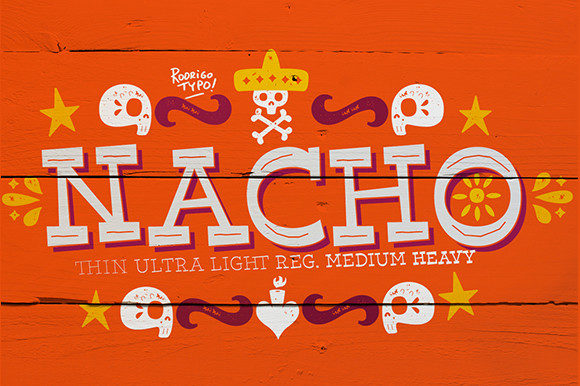
There's a moment in design when you find a font that doesn't just fill space—it tells a story. Nacho is one of those typefaces. Inspired by the vibrant energy of Mexican culture, particularly the festive spirit of Día de los Muertos, this slab serif font blends vintage charm with a playful, dynamic personality. It's not just another serif font; it's a creative asset that injects nostalgic character into any project. Whether you're working on a logo, packaging, or social media graphics, Nacho brings an unmistakable warmth and authenticity that modern, sterile typefaces often lack.
Visual Character and Personality
At its core, Nacho is a display font with thick, blocky serifs and slightly uneven curves that mimic hand-painted signage. The letterforms have a weathered, tactile quality, as if they've been stamped onto paper or carved into wood. This isn't a font that whispers; it speaks with confidence and joy. The weight variations—from light to bold—allow for versatility, but even at its heaviest, Nacho maintains a friendly, approachable vibe. It avoids the rigidity of some traditional slab serifs, leaning instead into a retro aesthetic that feels both timeless and energetic.
What makes Nacho stand out in the crowded world of typefaces is its cultural resonance. It doesn't just reference Mexican folk art; it embodies the celebration and craftsmanship behind it. The slightly irregular baselines and playful terminals give it a handcrafted feel, making it ideal for projects that need a human touch. In a design landscape saturated with clean, geometric sans serif fonts, Nacho offers a refreshing alternative that commands attention without overwhelming the viewer.
Where Nacho Truly Shines: Practical Applications
Choosing the right creative font often comes down to context. Nacho excels in environments where personality and nostalgia are assets. Think brewery logos, artisan food packaging, or event posters for cultural festivals. Its vintage slab serif structure makes it perfect for branding that aims to feel established, trustworthy, and full of character. For entrepreneurs building a brand identity, Nacho can serve as the cornerstone typeface—especially for businesses in the food, beverage, or lifestyle sectors where authenticity matters.
In publishing and editorial design, Nacho works beautifully for chapter titles, pull quotes, or magazine headlines. It adds visual hierarchy without feeling cold or corporate. Bloggers and content creators can use it for featured images, YouTube thumbnails, or podcast cover art to create immediate visual interest. On social media, where scroll-stopping power is crucial, Nacho's bold presence helps graphics stand out in a crowded feed. It's also a fantastic choice for packaging design—think coffee bags, hot sauce labels, or craft beer cans—where the font itself becomes part of the product's story.
Font Pairing: Balancing Nacho with Other Typefaces
While Nacho is strong enough to carry a design on its own, pairing it wisely can elevate your work. Since it's a display font with a lot of personality, it often pairs best with simpler, more neutral typefaces for body text. A clean sans serif font like Helvetica, Futura, or Open Sans creates a nice contrast, allowing Nacho to headline while the supporting text remains highly readable. For a more vintage or eclectic feel, you could pair it with a subtle script font or a handwritten font for accents—but use these sparingly to avoid visual clutter.
When testing font pairings, pay attention to x-height and weight balance. Nacho's bold, blocky serifs can dominate a layout if not balanced carefully. Use it primarily for headings, logos, or short bursts of text rather than long paragraphs. Its strength lies in impact, not in sustained reading. Always test your combinations at different sizes and on various backgrounds to ensure legibility, especially for digital applications like web design or mobile screens.
Practical Considerations: Licensing, Styles, and Readability
Before committing to any premium font, it's wise to review what's included. Nacho typically comes with multiple weights and styles—often regular, bold, italic, and sometimes condensed or extended versions. Check the font package for these variations; they give you flexibility across different design scenarios. If you're using it for commercial projects, ensure the licensing covers your intended use. Most font foundries offer different licenses for desktop, web, and app use, so read the terms carefully to avoid legal issues down the road.
Readability is another key factor. While Nacho is legible at medium to large sizes, its detailed serifs and vintage styling can become muddy at very small sizes or in dense blocks of text. Use it strategically—for headlines, logos, and display text—and opt for a simpler serif font or sans serif font for body copy. Test your designs in real-world conditions: print a sample, view it on different screens, and get feedback from others. A font that looks great on your monitor might not translate well to a printed brochure or a mobile app.
Ultimately, choosing a typeface like Nacho is about aligning your design with your message. It's not a one-size-fits-all solution, but for the right project, it can be transformative. It brings a sense of history, craft, and joy to designs that might otherwise feel generic. Whether you're a small business owner crafting your brand identity, a designer working on a client's packaging, or a hobbyist creating personalized invitations, Nacho offers a distinctive voice that's hard to replicate with more conventional fonts.
Final Thoughts on Integrating Nacho into Your Workflow
In a world where design trends come and go, Nacho stands out because it's rooted in something deeper than aesthetics. It's a typeface that carries cultural weight and emotional resonance, making it a powerful tool for storytelling. As you experiment with it, pay attention to how it influences the perception of your work. Does it make your brand feel more approachable? Does it add the right amount of nostalgia to your editorial layout? The best way to learn is to apply it—try it in a mockup, test it with your audience, and see how it performs.
Remember, great design isn't just about picking a cool font. It's about choosing the right tool for the job and using it with intention. Nacho is a versatile, expressive slab serif that can elevate your projects when used thoughtfully. Keep exploring, keep testing, and let your creativity guide you. The right typeface can make all the difference—and Nacho might just be the missing piece you've been looking for.