Munchausen: The Retro Sans Serif with Modern Appeal
There's a particular feeling you get when you find a font that just clicks. It has personality without shouting, character without sacrificing clarity. That's the space Munchausen occupies. Created by designer Nick Curtis, this retro sans serif typeface carries the warmth and optimism of mid-century design into contemporary projects. It's not trying to be everything—it knows exactly what it is, and that confidence translates directly into the work it supports.
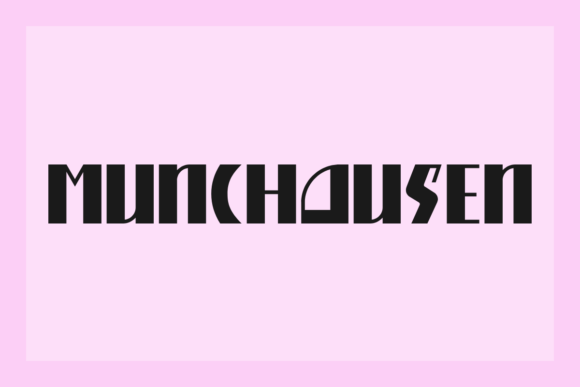
At its core, Munchausen is a sans serif font with distinctly retro roots. The letterforms have a slightly condensed, geometric quality that recalls signage, advertisements, and packaging from the 1950s and 1960s. But there's nothing stiff or museum-piece about it. The strokes carry subtle humanist touches—gentle curves, balanced proportions, and a rhythm that feels approachable rather than clinical. It's the kind of creative font that bridges eras, looking equally at home on a vintage-inspired t-shirt and a clean modern brand identity.
Where Munchausen Finds Its Voice
Think about projects where personality and readability need to coexist. That's where this display font excels. For logo design, Munchausen offers enough distinction to become recognizable without relying on gimmicks. It carries weight and presence at larger sizes, making it a natural fit for wordmarks and brand marks that need to communicate confidence and style. Entrepreneurs launching boutique brands—whether in food, fashion, or lifestyle—often find that Munchausen strikes the right balance between professional and personable.
In editorial design and publishing, the font works beautifully for headlines, pull quotes, and chapter titles. It draws the eye without overwhelming accompanying body text. Bloggers and content creators regularly pair it with a clean serif or a simple sans serif for long-form reading, letting Munchausen handle the moments that need visual emphasis. There's a natural hierarchy it establishes—one that readers process intuitively.
The font also translates well across packaging design, social media graphics, and web design. On Instagram posts, Pinterest pins, or website hero sections, it delivers that polished-yet-approachable tone that many brands chase. For t-shirt designs and merchandise, its retro personality shines. Quotes, slogans, and typographic compositions come alive with a character that feels intentional rather than default.
Understanding the Font's Personality
Every typeface communicates something beyond the words it forms. Munchausen speaks with a voice that's friendly, slightly nostalgic, and unmistakably confident. It doesn't carry the cold precision of a geometric sans serif like Futura, nor does it have the playful bounce of a handwritten font or script font. Instead, it sits in a thoughtful middle ground—professional enough for commercial use, expressive enough to feel human.
This personality makes it particularly effective for brands that want to project authenticity without sacrificing polish. A small coffee roaster, a craft brewery, an independent bookstore, a handmade jewelry line—these businesses often need typography that feels genuine and established without appearing corporate. Munchausen delivers that naturally.
It's worth noting that as a premium font, Munchausen comes with the craftsmanship and attention to detail that free alternatives often lack. The spacing, kerning, and overall consistency reflect professional modern typography standards. You're not just buying letter shapes—you're investing in a design asset that's been carefully constructed to perform reliably across contexts.
Practical Guidance for Working with Munchausen
Choosing any commercial font starts with evaluating fit. Before committing, set a few sample words or phrases in the typeface. Does it match the tone of your project? A playful children's brand might find Munchausen too restrained, while a luxury skincare line might want something more delicate. But for brands and projects sitting in that sweet spot of approachable professionalism, it's often an excellent match.
Font pairing is where many designers unlock the real potential of a display typeface. Munchausen pairs well with neutral, understated companions. Try it alongside a classic serif like Garamond or a humanist sans serif like Open Sans for body copy. The contrast creates visual interest while maintaining cohesion. Avoid pairing it with another strong personality font—two competing voices create noise rather than harmony.
Check what's included in the font package before purchasing. Many premium fonts offer multiple weights, stylistic alternates, or extended character sets. Understanding these options upfront helps you make the most of your investment and ensures the typeface can adapt as your project evolves.
Readability deserves attention, especially at smaller sizes. Munchausen's slightly condensed forms work wonderfully at headline and subheadline sizes, but test it carefully for anything below 14 pixels on screen or 10 points in print. For body text, you'll almost certainly want to switch to a companion typeface designed for extended reading. This isn't a limitation—it's simply recognizing that display fonts and reading fonts serve different purposes.
Building Brand Identity with Intentional Typography
Typography is one of the most powerful yet overlooked elements of brand identity. The fonts you choose become part of how audiences recognize and remember you. Consistency matters—using the same typeface across your website, social channels, printed materials, and packaging creates a cohesive experience that builds trust over time.
Munchausen offers enough versatility to serve as a cornerstone of a brand's typographic system. Its retro character can anchor a vintage-inspired identity, while its clean construction keeps it from feeling dated. Marketers and brand strategists often recommend selecting one or two primary fonts and committing to them across all touchpoints. If your brand's voice aligns with what Munchausen communicates—warmth, confidence, approachability with substance—it can become that anchor.
For entrepreneurs and small business owners building their own materials, working with a well-crafted typeface like this simplifies the design process. You don't need to be a typography expert to make it look good. Set your headlines in Munchausen, choose a simple companion for body text, maintain consistent sizing and spacing, and you'll achieve a professional result that reflects well on your business.
The right font doesn't just look good—it does work for you. It sets expectations, communicates values, and creates the visual framework that holds your entire brand identity together. Munchausen does that work with quiet confidence, letting your message take center stage while providing the character and distinction that makes it memorable.