True Blush: A Handwritten Font for Elegant Branding
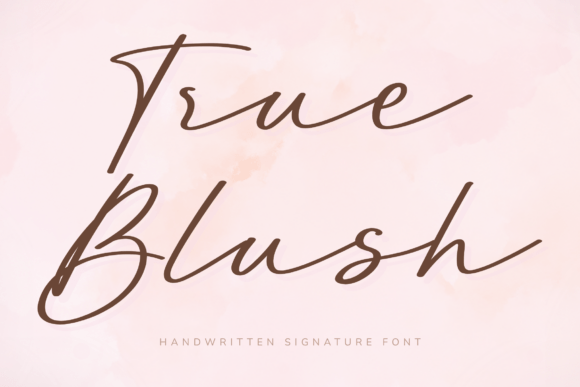
There's a particular quality to a well-executed handwritten signature. It feels personal, immediate, and carries a sense of authenticity that a standard typed name simply can't replicate. This is the exact feeling True Blush aims to capture. It’s not just another script font; it’s a premium font designed to emulate the fluid, confident strokes of a natural pen movement. The character set features graceful, flowing ligatures and refined letterforms that connect seamlessly, creating a look that is both sophisticated and warmly personal. Its personality is one of feminine elegance and soft romantic charm, making it a versatile creative font for projects that require a human touch without sacrificing professionalism.
The visual style of True Blush sits in a sweet spot between formal calligraphy and casual handwriting. It avoids the overly ornate flourishes that can reduce legibility, and it steers clear of the loose, scratchy look of some handwritten fonts that might feel too informal for commercial use. Instead, it offers a balanced, modern typography solution. The slightly varied baseline and subtle pressure changes in the strokes give it an organic feel, as if each letter was carefully considered. This makes it an excellent choice for a display font, where it can be used at larger sizes to showcase its beautiful details in headlines or short quotes. As a handwritten font, its strength lies in evoking emotion and establishing a distinct, memorable tone for a brand identity.
Where True Blush Finds Its Home
Understanding a font's ideal application is key to using it effectively. True Blush excels in contexts where elegance, personality, and a touch of luxury are desired. Think about the first impression of a brand. For logo design, particularly for businesses in the wedding, beauty, lifestyle, or boutique sectors, this typeface can become the cornerstone of a visual identity. A jewelry designer, a high-end cosmetics line, or a bespoke stationery shop could use True Blush for their logotype to instantly communicate refinement and a personal, artisanal quality. Its flowing nature makes it especially suitable for names that contain letters with tails or loops, like 'g', 'y', or 'f'.
Beyond logos, its applications in packaging design and editorial design are extensive. Imagine the product name on a bottle of artisan perfume or a line of organic skincare; True Blush adds that final layer of perceived quality. In publishing, it’s perfect for chapter titles, pull quotes, or author signatures on book covers and interiors. For social media graphics, it can be used to create engaging quotes, announcement posts, or Instagram Story headers that stand out in a fast-scrolling feed. Its elegance also translates beautifully to web design, where it can be used for hero section headlines or special announcement banners on a homepage to draw the user's eye.
- Wedding & Event Stationery: Invitations, save-the-dates, menus, and programs.
- Photography Watermarks: A subtle, branded signature that doesn't overpower the image.
- Business Cards & Letterheads: For a personal touch in professional correspondence.
- Digital Products: E-book covers, online course branding, and printable planners.
The Strategic Impact on Your Project
Choosing a font like True Blush is a strategic decision that influences more than just aesthetics. It directly affects visual hierarchy and brand perception. When used as a headline font paired with a clean sans serif font for body text, it creates an immediate and effective contrast. The script font draws attention and sets an emotional tone, while the sans serif ensures the supporting content remains highly readable. This pairing is a fundamental principle of good modern typography and helps guide the reader's eye through the information, whether on a website, a brochure, or a social media post.
Consistency is another critical benefit. By integrating True Blush across various touchpoints—from your logo design to your email headers to your packaging design—you build a cohesive and recognizable brand identity. Customers begin to associate that specific, elegant handwritten style with your business, which strengthens brand recall. However, this requires thoughtful application. It’s a display font at its core, so using it for long paragraphs of text would hinder readability. Its power is in headlines, logos, and short, impactful phrases where its character can be fully appreciated without tiring the reader's eye.
A Practical Guide to Working with True Blush
Before committing to any commercial font, practical testing is essential. Start by evaluating if its personality aligns with your project's goals. True Blush communicates softness, romance, and sophistication. It would be a mismatch for a tech startup or a rugged outdoor brand, but a perfect fit for a floral designer or a luxury wellness blog. Review the full character set and any included styles. Does it offer multiple weights, stylistic alternates, or swashes? These features can provide crucial flexibility, allowing you to customize the look and avoid the "out-of-the-box" feel that can sometimes make a font seem overused.
Next, focus on font pairing. Create mockups and test True Blush alongside potential companion fonts. A simple, geometric sans serif font like Montserrat or Lato often works well, providing a clean and modern counterbalance. For a different feel, a delicate serif font like Cormorant Garamond could create a more classic, literary vibe. The key is contrast in style but harmony in mood. Always test for readability at the sizes you intend to use it. Check how it renders on screen versus in print, and ensure the letter spacing is comfortable. Finally, always verify the licensing. Confirm that the license for True Blush covers all your intended uses, whether for digital design assets, printed materials, and for client work if you are a designer. A clear understanding of the license protects your investment and ensures you can use this beautiful typeface confidently in all your creative endeavors.